Business Name: BeeHive Homes of McKinney
Address: 8720 Silverado Trail, McKinney, TX 75070
Phone: (469) 353-8232
BeeHive Homes of McKinney
We are a beautiful assisted living home providing memory care and committed to helping our residents thrive in a caring, happy environment.
8720 Silverado Trail, McKinney, TX 78256
Business Hours
Monday thru Saturday: Open 24 hours
Facebook: https://www.facebook.com/BeeHive.Frisco.McKinney/
Instagram:
💬 ChatGPT 🔍 Perplexity 🤖 Claude 🔮 Google AI Mode 🐦 Grok
When households begin taking a look at senior care, they normally picture large assisted living neighborhoods, with long hallways, numerous dining rooms, and an occasions calendar that appears like a cruise liner schedule. Those settings work well for lots of older grownups. Yet families often tell me, after a few months, that something is missing: warmth, connection, or a sense that personnel truly understand their parent as an individual and not as "the fall threat in room 214."
That gap is where small senior care homes, also called residential care homes or board-and-care homes in lots of states, silently excel. They are not as greatly promoted, and they rarely have marble lobbies, but they can provide precisely what most people say they want for their aging parents: real relationships, flexible assistance, and a living environment that seems like a common home.
This matters both for long-term senior care and for short-term stays such as respite care, when a family caretaker requires a break, has surgery, or faces a temporary crisis. The fit between an older adult and the care environment during those durations can make the difference in between constant improvement and rapid decline.
What follows shows decades of combined observation of families, citizens, and caretakers memory care mckinney tx in both settings, large and small. No single model is generally much better, but the strengths of small homes are underused merely since people do not understand they exist or do not understand how to assess them.
What is a small senior care home?
Most small senior care homes are exactly what they sound like: common houses in residential communities, converted to supply 24/7 elderly care. Depending upon local regulations, they generally serve in between 4 and 10 locals. There is a kitchen where actual cooking takes place, a living room with familiar furniture, a yard or outdoor patio, and bed rooms that may be private or shared.
They generally fall under state licensing classifications that might be named assisted living, residential care, individual care home, or something comparable. The specific label differs by state, however functionally they being in the very same general area as assisted living, not as competent nursing facilities. They offer assist with activities of daily living such as bathing, dressing, toileting, movement, and medication suggestions. A lot of do not offer extensive medical treatments that need a licensed nurse around the clock.
A typical staffing pattern may be one caretaker for each three to 5 residents throughout the day, and one awake caretaker at night for the whole home. The actual ratio differs, however it is normally far much better than the ratios in bigger communities or nursing homes, where one aide may be assigned to 10, 15, or perhaps more locals per shift.
Because of the small size, routines feel a lot more like family life. Breakfast does not need a trip to a big dining-room. If somebody sleeps late, staff can adjust. If a resident hates oatmeal and enjoys eggs, that preference actually sticks in personnel's minds.
Why households begin looking beyond huge assisted living communities
Most families begin their search with the huge names. They are visible, have marketing groups, and sponsor occasions. There is nothing incorrect with that. Many of those neighborhoods deliver safe, skilled senior care.
However, a number of patterns tend to drive families to think about smaller settings after they have already attempted bigger assisted living facilities.
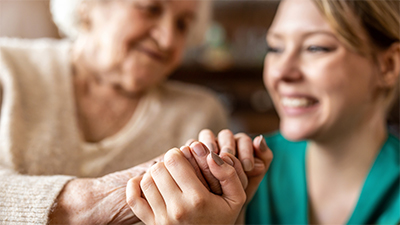
One circumstance includes cognitive decrease. A resident with early or moderate dementia moves into a large structure. The first weeks go well. Then the household notifications their parent beginning to separate, avoiding activities, or getting lost on the way back to their room. Staff, stretched thin, can not constantly escort them, and other citizens reoccur. The environment feels overwhelming. In a small senior care home, that very same individual may have only a handful of faces to keep in mind, and no long passages to navigate.
Another typical trigger is inconsistent personnel. In bigger facilities, turnover is high. Households often complain that the caretaker who understood their mother's early morning routine all of a sudden vanishes from the schedule, and the replacement does not understand how to coax her into the shower without a battle. In a home with 6 homeowners and a stable group of 3 or four caregivers, continuity is far easier to maintain.
There are likewise character fits. Some older adults flourish in environments buzzing with activities, big group meals, and regular visitors. Others invested their entire lives in small families and choose peaceful, predictable days. For them, a three-story structure with a hundred residents seems like an airport. A residential care home, tucked into a neighborhood, might match their sense of scale.
Why small homes can be perfect for respite care
Respite care is typically a family's first test drive of official elderly care. A spouse or adult kid caretaker reaches a limitation, physically or emotionally, and needs a break. Or they must travel for work, or recover from their own surgical treatment. The aging parent requires a safe, supportive location for one to 6 weeks.
Large assisted living facilities do provide respite care, normally utilizing furnished "respite suites." The resident participates in routine activities and meals. This works finest for fairly independent older grownups who delight in social interaction and can adapt quickly.
Small senior care homes, in my experience, shine when the care receiver is frail, anxious, or has moderate dementia. The shift into respite care is shorter. The list of new individuals to find out is limited. There is typically no requirement to remember a new layout. The gives off cooking and the sounds of a television in the living-room feel familiar, not institutional.
Respite remains in small homes can also be more versatile. Households sometimes need just a vacation or a stretch of nine or 10 days that does not conform to a basic month-to-month billing cycle. A small home, with an open room, might want to exercise everyday or weekly rates, particularly if they see potential for a longer relationship later.
One of the most essential, underrated benefits of utilizing a small home for respite care is what it reveals. Caretakers can see how their parent does when toileting tips originated from somebody else, or when medication times are stricter. They can observe how rapidly their loved one forms bonds with brand-new caretakers. If a future long-term move is likely, these short stays make it far less disruptive.
How customized care really looks in a small home
The phrase "individualized care" is overused in marketing, yet you can tell really rapidly whether a setting measures up to it. In a small senior care home, customization appears in small, particular ways that build up over time.
Breakfast is a good example. In big assisted living facilities, breakfast hours might be 7 to 9 a.m. Locals line up or are seated in shifts. Menus are set. If somebody gets to 9:10, the cooking area might currently be tidying up. In a small home, you frequently see caretakers making toast at 9:45 because one resident always sleeps in, or reheating oatmeal due to the fact that someone chose they were hungry again.
Bathing and health follow the exact same pattern. Some citizens tolerate showers just in the afternoon, not very first thing in the early morning when their joints are stiff. Others prefer a sponge bath most days and a complete shower twice weekly. When personnel take care of 6 individuals rather of sixty, they can remember those patterns rather than requiring everybody into one routine.
Medication management also tends to be more flexible. While dosages and times are prescribed, the way reminders are delivered can be customized. One resident responds well to a mild spoken cue, another likes her pills provided with a particular drink. With less interruptions, caregivers can stick with somebody who thinks twice or refuses medication, instead of leaving due to the fact that they have twelve more homeowners to see before 10 a.m.
Even the psychological landscape is various. In small homes, caretakers see and respond to state of mind shifts in real time. If a resident looks withdrawn, they can sit down at the cooking area table and ask about it without stressing that other locals will be left ignored. That responsiveness is what frequently avoids small problems, such as moderate dehydration or irregularity, from intensifying into emergency clinic visits.
Comparing small homes and bigger assisted living communities
Families often request an easy decision: which is much better, a small residential care home or a bigger assisted living community? The sincere answer is that it depends on the person and the circumstance. That stated, some distinctions appear consistently.
Here is a short comparison that can assist arrange your thinking:
- Environment: Small homes seem like actual houses, with shared areas that look like a household living-room and kitchen area. Large assisted living communities feel more like apartment buildings or hotels, with private apartment or condos and main dining. Social life: Big neighborhoods use more structured activities, getaways, and chances to meet numerous peers. Small homes provide less group occasions however more intimate, daily social contact with the very same people. Staff interaction: In small homes, caregivers frequently understand each resident deeply, however there are less experts such as activity directors. In bigger settings, the team is larger and more specialized, however individual aides may rotate often between residents. Cost structure: Large facilities often promote lower base rates, then add separate charges for higher care levels. Small homes often price estimate a more inclusive month-to-month fee that packages most care tasks into a single rate, though this varies. Medical intricacy: For locals with extremely complicated medical requirements, a skilled nursing facility may be better suited than either a small home or standard assisted living. Some bigger neighborhoods have better access to on-site clinicians, while some small homes partner closely with home health firms or checking out nurse services.
That list reflects common patterns. There are exceptional large neighborhoods that feel warm and personal, and there are small homes that fail at the essentials. The point is to comprehend where each model tends to stand out so that your trips and concerns are more focused.
When a small home is specifically helpful
Certain circumstances tend to benefit disproportionately from the scale and intimacy of a small residential care home.
Older grownups with mid-stage dementia typically react very well. Fewer individuals, less noise, and predictable routines decrease confusion and agitation. When someone begins to "sunset" in the late afternoon, personnel can redirect them calmly, maybe with a cup of tea at the kitchen area table, rather than trying to handle escalating behaviors in a corridor full of activity.
People prone to roaming are another group to consider. Numerous small homes have secure backyards or patio areas where homeowners can stroll freely without leaving the property. Because there are just a few locals, personnel notification if somebody heads toward the front door aimlessly. That direct observation can be more effective than electronic alarms in congested hallways.
Frailer citizens, who require help with the majority of activities of daily living, tend to be a better fit as well. A caretaker who takes care of only 3 or four locals can afford to move someone gradually, check that clothes is not twisted, and invest an additional minute getting someone comfy in their favorite chair. Those are the small pieces of self-respect that bigger settings struggle to preserve when personnel are outnumbered.
Short-term respite take care of individuals who are nervous, shy, or quickly overwhelmed by sound is also smoother in a small home. I have seen peaceful, reserved seniors decline rapidly during a two-week respite remain at a large, noisy facility, then settle and regain appetite in a smaller setting where the overall variety of day-to-day interactions was manageable.
Trade-offs and constraints of small senior care homes
The strengths of small homes do not eliminate their restrictions. A sensible view helps prevent disappointment later.
One compromise involves variety. Activities in small homes lean heavily on discussion, television, simple games, light workout, and one-on-one engagement. There may not be everyday music performances, lecture series, or getaways to dining establishments. For residents who are cognitively undamaged and delight in a complete social calendar, a small home might feel constraining after the very first few weeks.
Another concern is staffing depth. When a caregiver calls in sick at a big facility, there is usually a back-up pool. In a six-bed home, protection might include the owner or manager actioning in. That can work wonderfully if management is hands-on and dedicated. In weaker homes, staff fatigue can creep in if there is no trusted replacement system.
Dietary range can also be limited. Numerous small homes do a wonderful job with basic, home-style meals. However, they rarely have the ability to produce custom-made menus for a number of various diets at the same time. If your parent follows a strict spiritual, medical, or individual diet that deviates significantly from standard choices, you require to ask in-depth concerns and see how they manage it in practice.
Regulation and oversight vary by state. Some jurisdictions examine small homes with the same rigor as large assisted living communities. Others provide less structured oversight, which puts more obligation on families to vet the home thoroughly. Great small homes welcome transparency, welcome questions, and are happy to show documents. If you feel you are being rushed, or your concerns rejected, treat that as a major warning sign.
Lastly, there is the psychological side. Families often feel guilt putting a parent in a setting that is familiar and intimate due to the fact that it does not look "fancy." They fret relatives will judge them for not choosing the structure with the grand lobby. In practice, what older adults appreciate on a daily basis is comfort, respect, and human contact, not design. It helps to keep that perspective clear when others start comparing brochures.
How to evaluate a small senior care home
Touring a small senior care home needs a slightly different mindset than visiting a large facility. Instead of scanning facilities, you are evaluating the quality of everyday life.
During the visit, pay close attention to the mood of your home. Not the marketing spiel, however the sensation in the space. Do homeowners look tidy, properly dressed, and at ease? Are personnel carefully engaged or glued to their phones? Does the tv blare constantly, or does it appear to be on for a purpose?
Trust your nose. Strong smells, either of urine or heavy deodorizing chemicals, generally suggest care problems. A faint smell now and then can take place in any setting, however relentless smells recommend systemic problems.
Listen to how staff talk to homeowners. Are they using names? Do they crouch or sit at eye level rather than calling from throughout the space? Small gestures here are very important. Personalized assisted living and elderly care depend more on tone and method than on furniture or wise technology.
It is typically useful to have a brief, focused set of concerns prepared. For numerous families, these 5 cover the most essential ground:
- What is your typical staff-to-resident ratio during days, nights, and nights? How do you manage citizens whose care requires increase over time? Can you explain a recent scenario where a resident declined or had a medical event, and how your group responded? What type of respite care stays do you accept, and how do you transition somebody from respite to long-lasting care if that becomes necessary? How do you keep families notified, specifically if they live out of town?
Ask to see the restroom setup, shower location, and at least one bed room that is not specially staged. If your parent utilizes a walker or wheelchair, check whether entrances and corridors are useful, not just technically certified. Lots of small homes do an excellent task adapting, however some older homes have tight corners that make transfers harder.
If possible, visit a 2nd time at a various hour. A home that looks calm at 10 a.m. Might be chaotic at 6 p.m. During shift changes and supper preparation. Senior care is a 24-hour business. You are investing in how they deal with all of it, not simply the peaceful parts.
Cost, contracts, and what to see for
Families typically presume that small homes are immediately more affordable. That is not always the case. In numerous markets, a well-run residential care home costs approximately the like mid-range assisted living, in some cases a little less, often slightly more.
What differs is how prices is structured. Bigger neighborhoods typically price quote a low "base rate" that covers real estate, meals, and light support, then include tiered fees for higher levels of care: assist with bathing, regular transfers, specialized dementia care, oxygen management, and so on. The last bill can end up much higher than the initial quote once a resident needs substantial assistance.
Small homes more often use a bundled design, where a single month-to-month cost covers all basic individual care jobs, with separate charges just for extremely intricate requirements. This is not universal, however it is common. That predictability helps households plan better, especially for long-lasting stays.
Regardless of the model, read the agreement thoroughly. Look for:
Clauses about rate boosts. Lots of suppliers schedule the right to raise rates yearly or when care needs increase. Ask how often they do so in practice and by what normal percentage.
Discharge requirements. Comprehend what happens if your parent's condition changes. At what point would they need a greater level of care, such as a nursing home? Who makes that decision, and how much notification are you given?
Respite care terms. If you are utilizing respite care initially, examine minimum stay lengths, deposits, and whether any portion is credited if you shift to long-term occupancy.
Refund policies. Life situations change rapidly. Make certain you understand just how much notice you need to supply to prevent additional charges when moving out.
Most families ignore how long they might need assistance. Assuming two to 5 years of assisted living or residential care is more realistic than assuming a couple of months. Matching the expense structure and contract flexibility to that horizon is as essential as judging the curb appeal.
Who is not a good fit for a small care home?
While I have actually seen numerous older grownups thrive in small homes, some are improperly served by this model.
Highly social, active senior citizens with excellent cognition who still drive, handle their own medications, and choose independent living typically find small homes too restricting. They may be better off in a large community that uses enriched social life and more autonomy, or in senior apartment or condos with a la carte services.
Individuals needing complex treatment provided by certified nurses around the clock typically belong in knowledgeable nursing or a specialized medical setting. A small home can operate in cooperation with home health or hospice in most cases, but it is not a substitute for a health center step-down unit.
There can likewise be character inequalities. A resident who is consistently loud, aggressive, or disruptive can overwhelm a small community of five or 6 people. Excellent homes screen thoroughly and are honest about whether they can maintain a safe and calm environment for everybody present.
Finally, some households worth status, on-site features, or brand track record above intimate care relationships. They might feel more at ease dealing with business structures and national policies. For them, a large assisted living chain might feel more foreseeable, even if the day-to-day experience is less personal.
Starting the conversation with your family
Shifting a parent from home to any kind of assisted living or elderly care involves sorrow, guilt, and, typically, difference amongst brother or sisters. Bringing a small senior care home into the discussion can actually alleviate some tension by reframing what "placement" looks like.
Instead of saying, "We are moving Mom to a center," you can say, "We found a home with six residents, where she will have her own space and someone to help her at night. Let us attempt a short respite care stay and see how she feels." That softer framing matches the truth of the environment.
If you are the primary caretaker, prepare specific examples of where you are struggling: lifting, night-time wandering, medication timing, your own health declining. Compare those needs with what the small home can reasonably provide. Households tend to react much better to concrete information than to basic statements such as "I am tired."
When checking out potential homes, if possible, include your parent a minimum of as soon as, unless their cognitive status makes that detrimental. Focus on their body language. Lots of older adults warm quickly to small homes since the scale reminds them of familiar life stages.
The withstanding question is constantly whether a setting provides safety without removing away personhood. Small senior care homes, when they are well run, hold that balance particularly well. They are not the ideal answer for everyone, yet they deserve a location at the top of the list for households looking for deeply personalized respite care and long-lasting assistance in a setting that feels less like a system and more like a home.
BeeHive Homes of McKinney offers assisted living services
BeeHive Homes of McKinney offers memory care services
BeeHive Homes of McKinney offers respite care services
BeeHive Homes of McKinney provides high-acuity assisted living
BeeHive Homes of McKinney supports independent living with assistance
BeeHive Homes of McKinney provides 24-hour caregiver support
BeeHive Homes of McKinney includes private bedrooms with private bathrooms
BeeHive Homes of McKinney provides medication monitoring and documentations daily
BeeHive Homes of McKinney serves home-cooked dietitian-approved meals
BeeHive Homes of McKinney offers daily social activities
BeeHive Homes of McKinney offers daily physical exercise opportunities
BeeHive Homes of McKinney offers daily mental exercise opportunities
BeeHive Homes of McKinney provides housekeeping services
BeeHive Homes of McKinney provides laundry services
BeeHive Homes of McKinney is designed with a residential, home-like environment
BeeHive Homes of McKinney assesses individual resident care needs
BeeHive Homes of McKinney provides fully furnished rooms for respite care residents
BeeHive Homes of McKinney includes three nutritious meals and snacks for respite residents
BeeHive Homes of McKinney offers life enrichment and engagement activities
BeeHive Homes of McKinney provides a secure outdoor courtyard
BeeHive Homes of McKinney has a phone number of (469) 353-8232
BeeHive Homes of McKinney has an address of 8720 Silverado Trail, McKinney, TX 75070
BeeHive Homes of McKinney has a website https://beehivehomes.com/locations/mckinney/
BeeHive Homes of McKinney has Google Maps listing https://maps.app.goo.gl/sZXqRQB8i4TARqPw6
BeeHive Homes of McKinney has Facebook page https://www.facebook.com/BeeHive.Frisco.McKinney/
BeeHive Homes of McKinney has Instagram https://www.instagram.com/bhhfrisco/
BeeHive Homes of McKinney has YouTube channel https://www.youtube.com/channel/UC9k4gftroTwifc34EzIwS2Q
BeeHive Homes of McKinney won Top Assisted Living Homes 2025
BeeHive Homes of McKinney earned Best Customer Service Award 2024
BeeHive Homes of McKinney placed 1st for Senior Living Communities 2025
People Also Ask about BeeHive Homes of McKinney
What is BeeHive Homes of McKinney monthly room rate?
The rate depends on the level of care that is needed. We do an initial evaluation for each potential resident to determine the level of care needed. The monthly rate is based on this evaluation. There are no hidden costs or fees.
Can residents stay in BeeHive Homes of McKinney until the end of their life?
Usually yes. There are exceptions, such as when there are safety issues with the resident, or they need 24 hour skilled nursing services
Does BeeHive Homes of McKinney have a nurse on staff?
No, but each BeeHive Home has a consulting Nurse available if nursing services are needed, a doctor can order home health to come into the home.
What are BeeHive Homes of McKinney visiting hours?
Visiting hours are adjusted to accommodate the families and the resident’s needs… just not too early or too late.
Do we have couple’s rooms available?
At BeeHive Homes of McKinney, Yes, each home has rooms designed to accommodate couples. Please ask about the availability of these rooms
Where is BeeHive Homes of McKinney located?
BeeHive Homes of McKinney is conveniently located at 8720 Silverado Trail, McKinney, TX 75070. You can easily find directions on Google Maps or call at (469) 353-8232 Monday through Sunday Open 24 hours.
How can I contact BeeHive Homes of McKinney?
You can contact BeeHive Homes of McKinney by phone at: (469) 353-8232, visit their website at https://beehivehomes.com/locations/mckinney, or connect on social media via Facebook or Instagram or YouTube
Conveniently located near Beehive Homes of McKinney Cinemark Allen 16 and XD is a great movie theater with full food & drink menu. Catch a movie and enjoy some great food while you wait.